

Quick Look
-
Temperament:
-
Egg Color:
-
Egg Production:
-
Cold Hardy:
-
Heat Tolerance:
-
Broodiness:
-
Purpose:
Active, alert, independent
White
High
Moderate
Excellent
Rare
Egg Production
Why We Raise Buff Leghorns
We raise Buff Leghorns because they represent a standard of efficiency, balance, and type that has defined good poultry breeding for generations. This is a breed built for purpose—high egg production, heat tolerance, and resilience—without excess or embellishment.
In Oklahoma, Buff Leghorns also carry a quieter legacy. Long before online trends or boutique breeding, knowledgeable poultrymen built birds by eye, experience, and restraint. One of those was Danny Feathers, remembered locally for his exceptional birds and deep understanding of poultry type. While our flock does not come directly from his lines, we have been told more than once that our birds resemble the balance and look he was known for—something we consider a meaningful compliment.
Our goal with Buff Leghorns is not novelty or reinvention. It is to raise clean, functional birds that reflect the strengths the breed has always been valued for, while maintaining the kind of clarity and consistency that experienced poultrymen recognized and respected.

Living With Buff Leghorns
Buff Leghorns are active, alert, and efficient birds. They are constantly moving, foraging, and aware of their surroundings, which makes them excellent layers but less suited to highly confined or low-activity setups.
They tend to be more independent than heavier or more docile breeds. With regular exposure and calm handling they can be manageable, but they are not typically a breed that seeks human interaction. Buff Leghorns do best with space, routine, and the ability to move freely rather than being treated as pets.
Because of their strong work ethic and energy level, they are well suited to keepers who value production, resilience, and function over temperament alone. When their needs are met, they are steady, productive birds that largely take care of themselves.
Climate & Seasonal Performance
Buff Leghorns are exceptionally well-suited to heat, which is one of the reasons they have remained a reliable production breed in warmer regions. Their lighter body type, activity level, and Mediterranean background allow them to continue laying through summer conditions that slow heavier breeds.
Cold tolerance is moderate. While they handle cool weather reasonably well, their larger single combs can make them more susceptible to frostbite during prolonged cold or wet winter conditions. Seasonal management and housing matter more for this breed than for heavier, cold-adapted birds.
Egg production naturally fluctuates with daylight length, but Buff Leghorns tend to remain consistent layers across much of the year when environmental needs are met.
Is This Breed a Good Fit for You?
Buff Leghorns are an excellent fit for keepers who prioritize egg production, efficiency, and resilience. They thrive in environments where birds have space to move, forage, and stay active, and they are especially well-suited to warmer climates.
This breed is a good choice if you appreciate independent, self-sufficient birds that focus their energy on laying rather than interaction. Buff Leghorns reward good management with consistent production and tend to do best in flocks where function and performance matter more than temperament alone.
They may not be the best fit if you are looking for a quiet, docile, or pet-oriented breed, or if your setup requires birds to remain confined for long periods. Buff Leghorns shine when their natural strengths—movement, awareness, and efficiency—are allowed to work for them.
Stewardship & Breeding Work
For those interested in a deeper look at this variety at Cross B Hens & Heifers, Buff Leghorns are maintained with an emphasis on purpose, balance, and long-established breed characteristics.
A Brief History of the Breed Variety
Leghorns originated in Italy and were later developed further in the United States, where they became known for their efficiency, egg production, and adaptability. As a Mediterranean breed, Leghorns were shaped by environments that favored active birds capable of thriving in warmer conditions and producing eggs consistently with minimal input.
The Buff variety emerged later than the more common white and brown Leghorns and was valued for maintaining the breed’s core strengths while offering a distinctive appearance. Like other Leghorns, Buffs were never intended to be dual-purpose birds; their identity has always centered on laying ability, efficiency, and functional design.
Over time, as commercial egg production narrowed toward a few specialized lines, many traditional Leghorn varieties declined in visibility. Buff Leghorns today are kept primarily by breeders and keepers who value the breed’s historic role, clean type, and proven productivity rather than novelty or trend.

Our Program, Progress, and Direction
Our Buff Leghorn program at Cross B focuses on maintaining clean type, strong production, and functional balance. These birds are selected first and foremost for what the breed has always done well: efficiency, consistency, and adaptability.
The flock is evaluated on overall performance rather than extremes. We prioritize steady egg production, sound structure, and birds that hold up well across seasons, while maintaining the active, refined build that defines the breed. Selection decisions are made with restraint, aiming for clarity and uniformity without pushing the birds beyond their intended purpose.
Moving forward, our direction remains consistent—raise practical Buff Leghorns that reflect the strengths the breed has long been valued for, rather than chasing trends or overcorrecting for any single trait.
A Closed Flock and Intentional Selection
Our Buff Leghorn flock is maintained as a closed flock, allowing us to monitor health, performance, and consistency over time. Working within a known population makes it easier to evaluate results accurately and avoid reactive changes that don’t support long-term stability.
Intentional selection guides each breeding season. Birds are evaluated on egg production, structure, overall vigor, and how well they reflect the active, efficient nature of the breed. No single trait is prioritized at the expense of balance or functionality.
Because Buff Leghorns are a breed defined by refinement rather than size or excess, progress is measured gradually. Selection decisions emphasize consistency and durability, ensuring the flock continues to perform as expected across seasons.
Balancing the Full Package
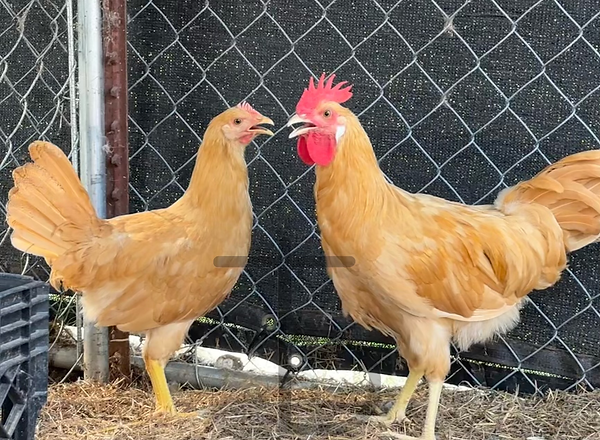
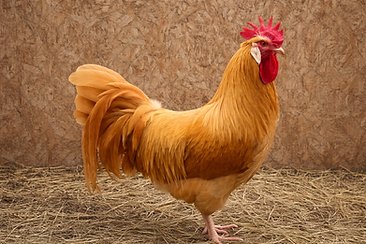
At first glance, Buff Leghorns appear straightforward. In reality, achieving a truly clean, correct buff color takes careful selection and patience. Subtle faults can show up easily, including black or brown ticking in the feathers (often referred to as mossiness), white appearing where it shouldn’t, or uneven shading across the body.
Color consistency presents its own balancing act. Buff should be rich and even, without gradients or patchiness, but pushing color too far can quickly lead to birds that shift toward an overly orange tone rather than the clear golden buff the breed calls for. Maintaining that balance across the entire bird is an ongoing challenge.
At the same time, color can never be selected in isolation. Buff Leghorns are first and foremost production birds, and maintaining strong egg output remains essential. Our focus is on refining color and type without losing sight of the breed’s primary purpose as a reliable, efficient layer.
Ongoing Evaluation and Future Work
Our work with Buff Leghorns is evaluated over time, with progress measured across seasons rather than individual hatches. Each breeding season provides information that helps guide pairing decisions and long-term direction.
Current areas of focus include improving buff color uniformity, reducing unwanted ticking or light feathers, and maintaining a clear, even golden tone throughout the plumage. We are also continuing to refine comb quality and work toward consistent yellow leg color, both of which contribute to overall clarity of type.
Alongside these refinements, continued attention is given to egg production, overall vigor, and structural soundness, ensuring the breed’s primary purpose as a reliable, efficient layer remains intact.
As the program moves forward, decisions remain grounded in balance and restraint. Refinement is approached gradually, with the goal of producing Buff Leghorns that perform reliably while continuing to improve consistency and type over time.
Why We Emphasize Hatching Eggs & Chicks
Raising birds beyond early stages requires time, space, and daily labor, and those resources are essential to maintaining an active breeding program. As birds mature, they are no longer simply being grown out — they are being observed and evaluated as part of the program. Space used to hold older birds is space that could otherwise support future breeder candidates.
Once birds reach the point where sex and pattern are clear, selection decisions begin. Some birds are identified early, while others are held longer to better understand how they develop. If a bird ultimately does not align with the direction of the program, it is absorbed into our own flock rather than offered for sale in an effort to recoup some cost.
Because of this structure, we are not set up to raise pullets or adult birds for others. For those hoping to work with our birds, hatching eggs and fresh-hatched chicks offer the most realistic opportunity. This allows the program to remain focused, sustainable, and centered on the breed itself rather than volume or turnover.
Following the Program’s Progress
As the program continues to develop, we share updates, photos, and seasonal progress through our social channels. This allows those who are interested to follow the evolution of the flock over time and see how long-term selection translates into visible improvement.
Pricing & Availability
Please review all information below before placing your order. By ordering, you agree to the terms outlined.
Hatching Eggs
Hatching Egg Information
Buff Leghorn – 2026 Season
Local Pickup: $80 per dozen
Shipped: $116 per dozen
Quantities are limited and may vary weekly based on laying consistency.
Eggs are marked with breeding pen and collection date for buyer reference. As a courtesy, one additional egg is included for every five eggs purchased.
Our Buff Leghorn breeding program is focused on strengthening:
• Rich, golden buff color consistency
• Even feather tone throughout the body
• Clean presentation with minimal white intrusion
• Reduction of brown ticking in feathering
While we select carefully each generation, occasional white feathers or light brown ticking may still appear
Egg Handling & Collection
Eggs are collected within a 3-day window, stored on egg turners at room temperature, and candled prior to shipment to ensure structural integrity before packing.
Orders are fulfilled in the order received. Most orders ship within 7–14 days; however, depending on laying consistency and breeding program demands, fulfillment may take up to 4 weeks.
Shipping & Pickup
Shipping is included in the listed price for up to one dozen eggs per order. Orders are packed using foam shipping systems and sent via USPS Priority Mail.
We ship to states that allow NPIP-certified poultry and hatching eggs.
AI Clean certification update expected April 2026.
Local pickup is available by appointment. You will be contacted when your order is ready to schedule pickup.
Important – Please Read Before Ordering
Due to the fragile nature of hatching eggs and variables involved in shipping and incubation:
Shipping Damage
If eggs arrive damaged, clear photos and video of the packaging and contents must be provided on the day of delivery, including the exterior box, interior packaging, and all damaged eggs. Once documentation is received, we will review and work toward an appropriate resolution.
Hatch Rates
We do not guarantee hatch rates. Hatch success is influenced by postal handling, incubation practices, equipment accuracy, and environmental conditions beyond our control.
By placing an order, you acknowledge and agree to these terms.
Chicks

• Straight-run
• $15 each (0–2 weeks)
• $20 each (3–4 weeks)
• Pricing reflects the 2026 season
Chicks are offered in limited, seasonal batches. Availability varies by hatch.
This breed is not sexed at hatch. Requests from specific breeding pens may be accommodated in limited situations.
All chicks hatched on the farm are wing-banded at hatch for identification and tracking.
Availability announcements are sent by email when ordering windows open.
